Not quite snow white

There are so many things I love about Ashley Franklin and Ebony Glenn‘s NOT QUITE SNOW WHITE: Body positivity, parents who nimbly reframe whispered putdowns into affirmations, and a story that pushes back against race and dominate beauty standards undermining how kiddos see themselves and, consequently, the roles they set out to snag.

When the normally-irrepressible Tameika hears other kids whispering about her height, race, and weight as she tries out for the role of Snow White in the school play, she’s deflated by uncertainty.

I appreciated that Franklin didn’t construct this story in such a way that Tameika “solves” the other kids’ bullying on her own. Picture books should take on big things, but the bigger, more entrenched the issues, the more we need loving adults to play a part in our texts.

And rather than deny Tameika’s differences, the parents help Tameika answer perceived lack with irrefutable bounty. With her confidence restored, Tameika shines in her audition. Now that deserves a standing O.

All kids should see themselves represented in picture books, and all kids should see children who don’t look like them star in stories that help us navigate our differences.

While not particularly interested in performance or theater arts, my own kiddo is really drawn to this story, and I think it’s because he’s at an age where he has a naturally strong sense of justice, and this book gets at such a universal desire: to be seen and loved, as and for who we are.
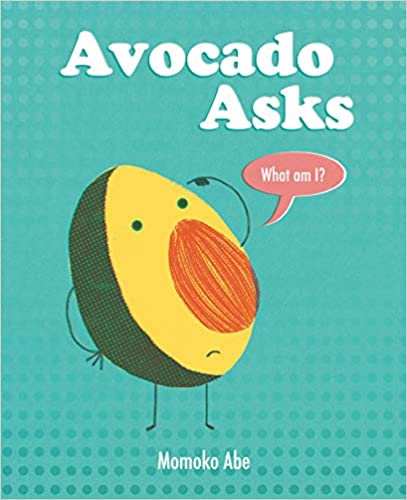
Avocado Asks

Avocado hasn’t given too much thought to their place in the world: a grocery store is a grocery store is a grocery store. But when an innocent question results in both the fruits and vegetables rejecting Avocado as one of their own, things sure get lonely.

In AVOCADO ASKS, Momoko Abe‘s delightful illustrations buoy the spunky Avocado (Avo is pleasantly spiteful when the cheese reject him) as Avocado journeys about the store, searching for belonging. In contrast to the fruits, vegetables, and other food items nestled in their containers, Avocado’s searching is a wonderful freedom.

Ultimately, Avocado finds their home not within a group but an idea: letting others label you, or claim or reject you, is about as conducive to happiness as a hill of beans.

Avocado’s got a free-spirited tomato to thank for that realization, and I love the way this simple-on-the-surface story explores big questions about human nature and the risks we can allow ourselves to take, and the payoffs we can find when we take them.

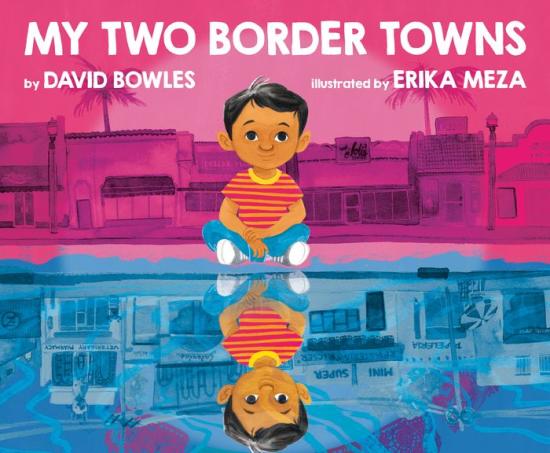
My TWO BORDER TOWNS

While funny picture books are my jam, David Bowles and Erika Meza‘s buoyant MY TWO BORDER TOWNS might have been my favorite children’s book I read in the past year. I have a real soft spot for picture books that feature families, and this simple-on-the-surface story incorporates some big, big topics – but with such a deft touch. And Erika Meza’s art – wow. It is gorgeous. I wish I had a print of just about every spread in this book.

A boy and his father travel from the U.S. to visit relatives and run errands on the Mexican side of the border. Bowles captures the magic of a trip–lively streets, special treats, playing with cousins–and, soon, there’s just one more stop. On their way home, father and son bring medicine and small gifts to refugees who they have befriended and who are camped on the border between Mexico and the U.S.

Bowles gets at the sadness and unfairness of the situation of those seeking entry to either country, but also ends with optimism, when the boy

“imagine[s] a wonderful day, when all my friends from the Other Side can go back and forth between my two border towns, just like me.”

Ultimately, MY TWO BORDER TOWNS reflects the vibrancy of border-town family life, something I heard Bowles say was important for him with this book. The family abounds in riches. And it’s a gift to be able to address something like unjust, short-sighted refugee and immigration policies and still leave people wanting more. But we do. As the family knows, there’s room enough for all of us.

MI PAPI TIENE UNO MOTO/MY PAPI HAS A MOTORCYCLE

True story: my in-laws, who were high school sweethearts and live in the midwestern factory town they grew up in, used to ride their motorcycles with my now-husband nestled on the gas tank in front of one of them, where he would fall asleep.

The family loves this story, because it’s youth, because they got away with something. Because it’s emblematic of what feels like, from the present, a freer past.

The first time I read Isabel Quintero and Zeke Pena’s MY PAPI HAS A MOTORCYCLE, I was struck by how much it reminded me of my in-laws and by how much I thought they would love this book. The working class ethos, the motorcycle as the object that brings father and child together as well as connects them to their larger yet close-knit community. And especially the lovingly drawn community – if the passage about the city always being with the young MC didn’t seal the deal, the part about food always tasing better at abuelita’s would!

The short-and-sweet of it: When MC Daisy’s carpenter dad gets home from work, the two set off on a joyful cruise around their city, affirming their deep connection through ritual and celebrating their immigrant neighborhood, in part by noticing what’s changed and changing. Tomorrow we ride again!

As a believer in We Need Diverse Books (vision, “A world in which all children can see themselves in the pages of a book”) I love how this book celebrates Latinx culture. Kiddos who live on our block can see themselves in these pages. That’s essential, non-negotiable.

And I also adore what creators from marginalized or underrepresented groups have known and said all along—books that champion marginalized or underrepresented groups are also another way to reflect all of our communities, to find the commonalities while those who are learning about the culture turn new words over on our tongues, discover holidays and traditions, and share the celebration of music or food, and the most universal of all languages – love.

My husband’s hometown has changed a lot over the years. The immigrant community is much larger, and some people struggle with that. Isabel Quintero’s book makes me think that if we could tell everyone to bring their classic cars, their motorcycles and meet in the park to share this book between them, something transformative could happen. And then maybe we could talk about PHOTOGRAPHIC and Graciela Iturbide – an incredible artist.